
- Date and Time
- 13th May 2025, 12:00 - 13:00
- Location
- National Centre for Sport and Exercise Medicine, Loughborough University. Room 1.39. Online access available.
- Booking
- The event has passed
Timed to coincide with Mental Health Awareness Week, this public lecture as delivered by Dr Anthony Papathomas, Reader in Sport and Exercise Psychology at Loughborough University, Andy Shepherd, Performance Nutrition Lead at Loughborough Sport and Rebekah Nisbet, Specialist Support Officer at First Steps ED. The talk will take place in May 2025.
The lecture will draw upon different disciplines to take a look at disordered eating in athletes. We will explore the subject from a psychological perspective, a nutritional viewpoint and also explore practical help that can be offered to those experiencing disordered eating, as well as those around them such as coaches and family.
Dr Anthony Papathomas, Reader in Mental Health in Sport, Loughborough University
Why do super-fit athletes often feel dissatisfied with their bodies? Why do some athletes monitor food and weight to the point of obsession? Why do athletes get eating disorders when fuel is essential to successful performance? Based on two decades of research in the field, Dr Anthony Papathomas argues that the answers may lie not in athlete psychological vulnerability, but in the cultural practices of competitive sport.
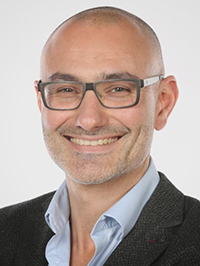 | Anthony’s research employs qualitative interpretive methodologies to understand the lives of marginalised groups and clinical populations. He is particularly interested in how athletes living with mental illness and poor mental health make sense of their experiences. Anthony’s narrative work argues that the stories people creatively tell about their lives hold consequences for experience, identity, and action. Anthony is Mental Health and Wellbeing Lead for the British Association of Sport and Exercise Sciences (BASES). He has also provided consultancy to a range of organisations, including the British Parachute Association, Leicestershire Fire and Rescue Service, Triathlon Foundation, and The Thomas Pocklington Trust. |
|---|
Dr Anthony Papathomas has also contributed to an expert comment video series on disordered eating in athletes.
Andy Shepherd, Performance Nutrition Lead, Loughborough Sport
Andy Shepherd draws on his experience of working with elite athletes as a performance nutritionist to provide insights into the role of nutrition in disordered eating in athletes.
 | Andrew Shepherd is an accomplished sport and exercise nutritionist with extensive experience in elite athletics. Currently, he serves as the Performance Nutrition Lead at Loughborough University, where he oversees nutrition strategies across multiple sports and manages a dedicated team of practitioners and interns. His expertise has contributed to the success of national and international athletes, particularly in swimming and boxing. Additionally, Andrew led the nutrition strategy for ParalympicsGB during the Paris 2024 Games, ensuring optimal support for athletes. A visiting fellow in Sports Nutrition, he brings industry insights through teaching and research at Loughborough University. |
|---|
Rebekah Nisbet, Specialist Support Officer, First Steps ED
First Steps ED was founded in 2004 as a self-help group in Derby, which took place every two weeks. Due to increasing demand and need for a support service, First Steps ED grew and became a registered charity in 2009. It is now commissioned to support various areas across the UK, but anybody is able to make a referral in. This presentation explores the types of support First Steps ED offers to those who are struggling with their relationships with food/eating, as well as the support available to parents/carers whose loved ones are struggling. People do not need a diagnosis to access First Steps ED support, and many of the staff and volunteers have lived experience of struggles themselves.
 | Rebekah has been working with First Steps ED for the last two and a half years and has supported a wide range of individuals in their recovery, from children and young people to university students and adults. She often draws on her own lived experience in her work, and feels that this is what makes her so passionate in the role she does. |
|---|
If you would like to receive email updates letting you know when we are holding future events please sign up here.